NBA Betting Analysis
NBA Sports Betting Sites in the UK 2026
By NBA Betting Analyst
 Available in US
Table of Contents
- UK NBA Sports Betting Market: Top Sportsbooks and Growth Real Payouts
- The Numbers and Moves That Matter Most
- The NBA Betting Market: UK and Global Numbers
- NBA Fandom in Britain: From Niche to Mainstream
- UK Gambling Regulation and What It Means for NBA Bettors
- NBA Bet Types at a Glance
- Three Strategy Pillars Every NBA Bettor Should Know
- NBA Fatigue-Adjusted Totals Calculator
- The NBA Season Calendar and When to Bet
- Integrity, Scandals, and the Future of NBA Wagering
- Responsible Gambling: A Framework, Not a Footnote
- What UK Punters Ask Most About NBA Betting
UK NBA Sports Betting Market: Top Sportsbooks and Growth Real Payouts
Three years ago, I placed my first NBA spread bet from a flat in Manchester at half past midnight, squinting at a Celtics-Bucks game on a laggy stream. The sportsbook offered four markets. Four. Moneyline, spread, total, first scorer — and that was it. Fast-forward to tonight, and the same operator lists north of 200 in-play options for a single regular-season game. That shift did not happen by accident. It happened because the NBA’s UK audience exploded, and the bookmakers followed the money.
The numbers behind this shift are striking. NBA viewership on Amazon Prime Video in the United Kingdom surged 312% year on year, while total UK viewership growth across all platforms hit 444% season over season. The NBA London Game in January 2026 drove the point home: 18,424 fans packed the O2 Arena, making it the most-watched NBA fixture ever staged in London, with a viewership spike of 90% compared to the last game in 2019.
UK NBA Viewership Growth
444% season-over-season increase across all platforms
Global Basketball Betting Market
$8.7-10 billion in 2024, projected to reach $17.45-18.4 billion by 2032-2033
NBA Projected Revenue 2025-26
$14.3 billion, up 12% year on year
In-Play Share of Online Betting Revenue
62.35% of all online sports betting revenue now comes from live wagers
Behind these audience figures sits a global basketball betting market valued at $8.7 to $10 billion, with the NBA accounting for roughly 60% of all basketball wagering worldwide. Basketball represents 15 to 18% of global sports betting activity, and that share keeps climbing. The NBA’s own revenue forecast for 2025-26 stands at $14.3 billion, a 12% jump fuelled by a landmark $76 billion media contract with Disney, NBC, and Amazon.
For UK punters, this creates a virtuous cycle: bigger audiences attract more sportsbook investment, which leads to deeper markets, sharper odds, and more sophisticated in-play products. In-play wagers already account for 62.35% of online sports betting revenue globally, and the NBA — with its constant scoring, frequent stoppages, and four-quarter structure — is arguably the ideal sport for live betting. I have spent more than eight years specialising in basketball wagering markets, statistical modelling, and the evaluation of UK-regulated sportsbooks. This guide distils that experience into a single, data-driven resource for the UK bettor who wants more than a list of welcome bonuses.
Whether you are placing your first NBA spread bet or refining a process that already fills your Saturday and Sunday nights, the objective is the same: market data, regulatory context, academic research, and practical frameworks that give you an edge beyond gut feeling.
The Numbers and Moves That Matter Most
- UK NBA viewership has surged 444% season over season, and the global basketball betting market ($8.7-10 billion) is projected to nearly double by 2033 — making the NBA one of the fastest-growing betting verticals for UK punters.
- The Remote Gaming Duty jump from 21% to 40% in April 2026 will tighten odds and squeeze promotional offers at UK sportsbooks. Line shopping across multiple operators is now essential, not optional.
- Academic research shows 19% of NBA games are decided in the fourth quarter and shooting efficiency declines measurably from Q1 to Q4 — patterns that create specific edges in live and totals betting.
- Integrity risks are real: recent insider-betting cases and the NBA’s own concerns about player-prop manipulation mean prop bettors should exercise particular caution on low-profile markets.
- Responsible bankroll management (1-3% per wager, fixed units, hard session limits) is the structural foundation that makes every other strategy sustainable over an 82-game season.
The NBA Betting Market: UK and Global Numbers
I keep a spreadsheet. Every October, when the NBA tips off, I log the number of pre-match markets offered by three UK-licensed sportsbooks for a randomly selected Tuesday-night game. In October 2020, the average was 38. By October 2025, it had crept past 180. That kind of market proliferation does not come from goodwill — it comes from revenue. And the revenue, as it turns out, is enormous.
The UK sports betting sector generates approximately 2.48 billion pounds in annual gross gaming yield, placing it among the largest regulated markets on the planet. Within that ecosystem, basketball has historically been a sideshow next to football. That is changing. Globally, basketball wagering pulls in somewhere between $8.7 and $10 billion per year, with projections pointing toward $17.45 to $18.4 billion by 2032-2033 at a compound annual growth rate of 7 to 8.7%. The NBA is the engine behind roughly 60% of that volume.
Zoom out further and the macro picture is even more striking. The global sports betting market sits at an estimated $112 to $125 billion in 2025-2026, forecast to reach $325.71 billion by 2035. Europe accounts for 44% of that total. The UK, as the continent’s most mature regulated market, is where European operators test products, refine risk models, and compete for wallet share before rolling features out to other jurisdictions. When a sportsbook develops a new NBA bet-builder product, it almost always launches in the UK first.
Regulatory shift ahead: The UK’s Remote Gaming Duty rises from 21% to 40% as of April 2026, with a new 25% remote betting duty layer arriving in April 2027. The government expects to collect an additional 1.1 billion pounds in gambling taxes by 2029-30. These changes will compress operator margins and may tighten NBA odds for UK punters — a topic covered in detail in the regulation section below.
The NBA commands 2.1 billion social media followers, 70% of them outside the US. That international fan base overlaps directly with the sports betting audience — when player news breaks on social media, betting lines shift within minutes across global sportsbooks.
Adam Silver wrote the op-ed that arguably kicked off the modern sports betting era in the United States back in 2014, arguing that “sports betting should be brought out of the underground and into the sunlight where it can be appropriately monitored and regulated.” That philosophy has shaped how the NBA interacts with the betting industry to this day — embracing data partnerships, official odds integrations, and integrity monitoring while pushing for tighter controls on vulnerable markets. The UK sits squarely in the middle of it: heavily regulated, deeply liquid, and growing faster for basketball than for almost any other sport.
NBA Fandom in Britain: From Niche to Mainstream
A friend of mine coaches under-16 basketball in Birmingham. Two seasons ago he had twelve kids at tryouts. This past September, forty-seven showed up. He ran out of bibs. That anecdote mirrors what the national data shows: basketball is now the second most popular participation sport in the United Kingdom, with around 1.5 million people playing. Among those, 344,400 adults were playing at least twice a month by 2023 — a 50% increase from 2021. More than 1.2 million children aged 5 to 16 play weekly. The pipeline of future NBA fans — and future NBA bettors — is being built in school halls and leisure centres across the country right now.
Prime Video NBA Viewership
312% year-on-year growth in the UK
Total UK NBA Viewership
444% season-over-season increase
London Game 2026
18,424 arena attendance; 90% viewership rise vs 2019
UK Adult NBA Fandom
24% growth since 2022
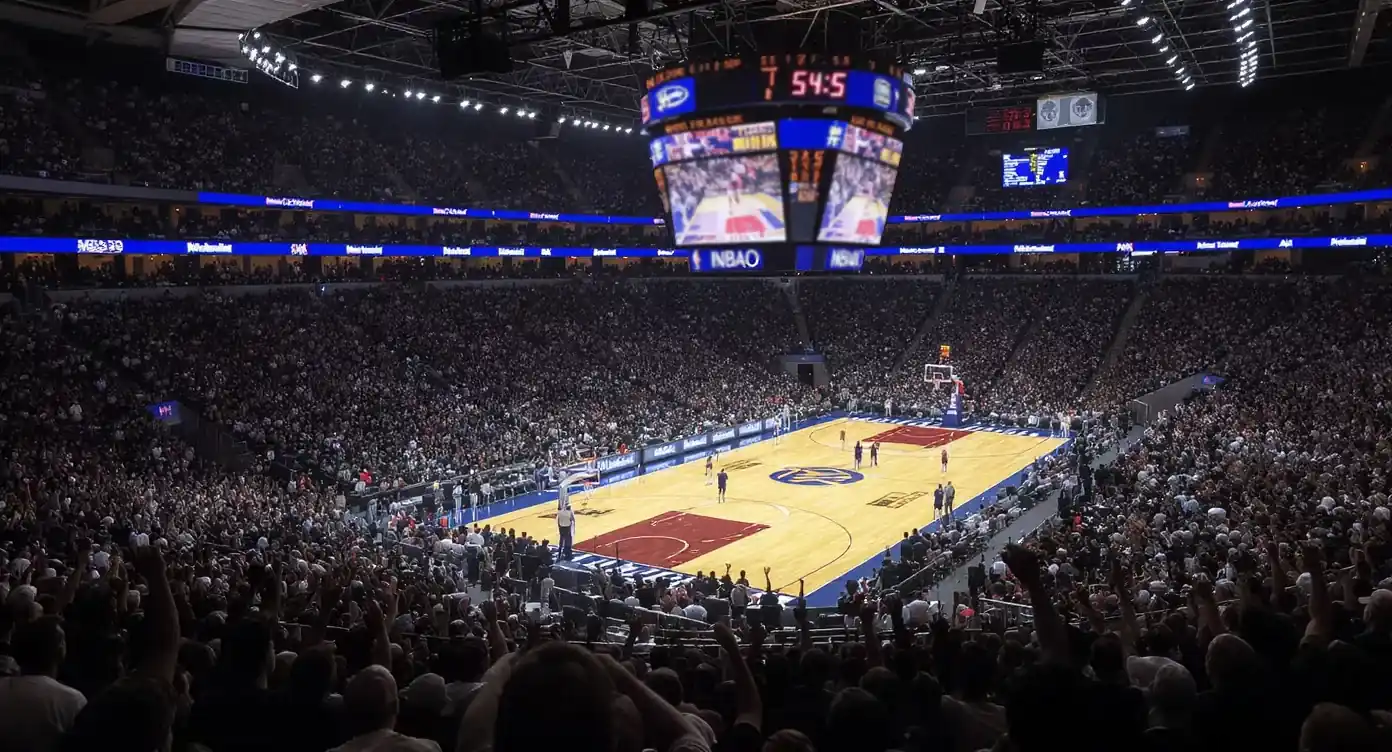
The viewership data reinforces the participation trend. NBA content on Sky Sports has seen a 40% viewership increase since 2019, with the sharpest gains among viewers under 30 — precisely the demographic that sportsbooks compete hardest to acquire. Amazon’s Prime Video deal has accelerated things further. Alex Green, Managing Director of Prime Video Sport International, put it plainly: “These record audiences on Prime Video demonstrate an untapped demand for the NBA in Europe, and we saw that passion once again in London. Audiences are consistently tuning in and making the NBA on Prime a part of their weekly sports schedule.” The league now broadcasts in seven languages across Europe, with dedicated commentary teams for each market.
Popularity among UK adults has grown 24% since 2022, and basketball sits sixth in the rankings for the 18-to-24 age bracket. That last data point matters enormously for the betting industry, because the 25-to-44 demographic — the natural progression of today’s 18-to-24 fans — currently accounts for 65% of all legal sports wagers. The NBA is not just growing its UK fan base; it is growing it in the exact cohort that bets the most.
Looking ahead, the NBA and FIBA are actively developing a European league concept targeting a 2027 launch, with plans for 14 to 16 teams in cities including London, Manchester, Paris, and Berlin. If that materialises, it would create a domestic-time-zone NBA-affiliated competition — transforming basketball betting in the UK from a late-night activity into a primetime one.
The 2026 NBA Playoffs have underscored the trend, averaging 3.91 million viewers per game — the highest figure in 33 years. That global buzz spills directly into UK betting volumes: when the stakes go up on court, the handles go up in sportsbooks.
UK Gambling Regulation and What It Means for NBA Bettors
I have a rule: before I look at a single NBA line, I check whether the sportsbook holds a valid UK Gambling Commission licence. It sounds basic. It is basic. And yet every year I hear from readers who placed bets with offshore operators and then struggled to withdraw winnings, dispute voided markets, or access any meaningful customer protection. The UKGC licence is not a rubber stamp — it is the mechanism that guarantees your funds are segregated, your disputes have a resolution pathway, and the operator is subject to ongoing compliance audits. The UK is the third-largest gambling market in the world, generating $27 billion in revenue in 2025 and sitting behind only the United States and India. That scale exists precisely because the regulatory framework works.
Tax landscape shift: The Remote Gaming Duty jumps from 21% to 40% effective April 2026. A new 25% remote betting duty arrives in April 2027. Together, these changes are projected to raise an additional 1.1 billion pounds in government revenue by 2029-30. For NBA bettors, the practical effect is tighter margins on sportsbook offerings — expect slightly worse odds and fewer lavish promotional offers in the coming seasons.

The regulatory environment is not static, and 2026 marks a genuine inflection point. That duty increase is the most aggressive tax hike the UK gambling sector has faced in its modern history. Operators will absorb some of that cost, but they cannot absorb all of it. The arithmetic is straightforward: higher tax rates compress gross gaming yield, and compressed yield means sportsbooks have less room to offer competitive odds or generous promotions. Helen Rhodes, Director of Major Policy Projects and Evaluation at the UK Gambling Commission, has acknowledged the intensity of the debate, noting that “there has been a lot of recent commentary about financial risk assessments and sadly much of it has been ill-informed or inaccurate.” The regulator is walking a line between consumer protection and market sustainability.
The market is already feeling the pressure. GGY from real-event betting in the UK dropped 18% year on year to 530 million pounds in the third quarter of the 2025-26 reporting period. Whether the dip is cyclical or structural, it signals that operators will need to serve customers more efficiently as their cost base rises.
The black-market dimension: The UK black market for gambling has ballooned to 16.6 billion pounds in 2025, nearly triple the level recorded in 2019. As legal odds get tighter post-tax-hike, the temptation to seek better prices offshore will grow. Unlicensed operators offer zero recourse if they refuse to pay out. Stick with UKGC-licensed sportsbooks, even if the odds are marginally worse.
The Premier League’s decision to ban bookmaker logos from the front of shirts starting in the 2026-27 season reflects a broader government appetite for reducing gambling’s visibility in sport. The former CEO of the UKGC, Andrew Rhodes, called the regulator’s 26-million-pound budget increase over three years “unprecedented in twenty years of his career in the public sector.” The direction of travel is clear: more oversight, higher costs, and a market that rewards those who play by the rules.
For the NBA bettor in the UK, the regulatory picture boils down to two practical considerations. First, always verify your sportsbook’s UKGC licence before depositing. Second, factor the tax environment into your expectations — the era of aggressively subsidised odds and endless free-bet offers is drawing to a close, and the punters who adjust their strategies to account for tighter margins will be the ones who come out ahead.
NBA Bet Types at a Glance
When I first moved from football to NBA betting, the thing that caught me off guard was not the terminology — it was the pace. A Premier League match offers a handful of meaningful betting moments. An NBA game, with its 48 minutes of clock time, 100-plus possessions, and constant lead changes, generates a rolling stream of opportunities across dozens of simultaneous markets. The dedicated NBA bet types guide covers each category in full; here is the essential map.
Point spread (handicap) betting is the NBA’s bread-and-butter market. The sportsbook assigns a points advantage or disadvantage to each team to level the playing field. If a team is listed at -6.5, they need to win by seven or more for a spread bet to pay out. Back the underdog at +6.5, and they can lose by up to six points and your bet still lands. The spread is where most sharp money flows and where sportsbooks invest the most in setting accurate lines.
Spread Betting
You bet on the margin of victory. The favourite must win by more than the spread; the underdog must lose by less (or win outright). Odds are typically close to even on both sides.
Moneyline Betting
You bet on which team wins, full stop. No spread involved. The favourite carries shorter odds; the underdog pays more. Simpler to understand, but the value equation is different.
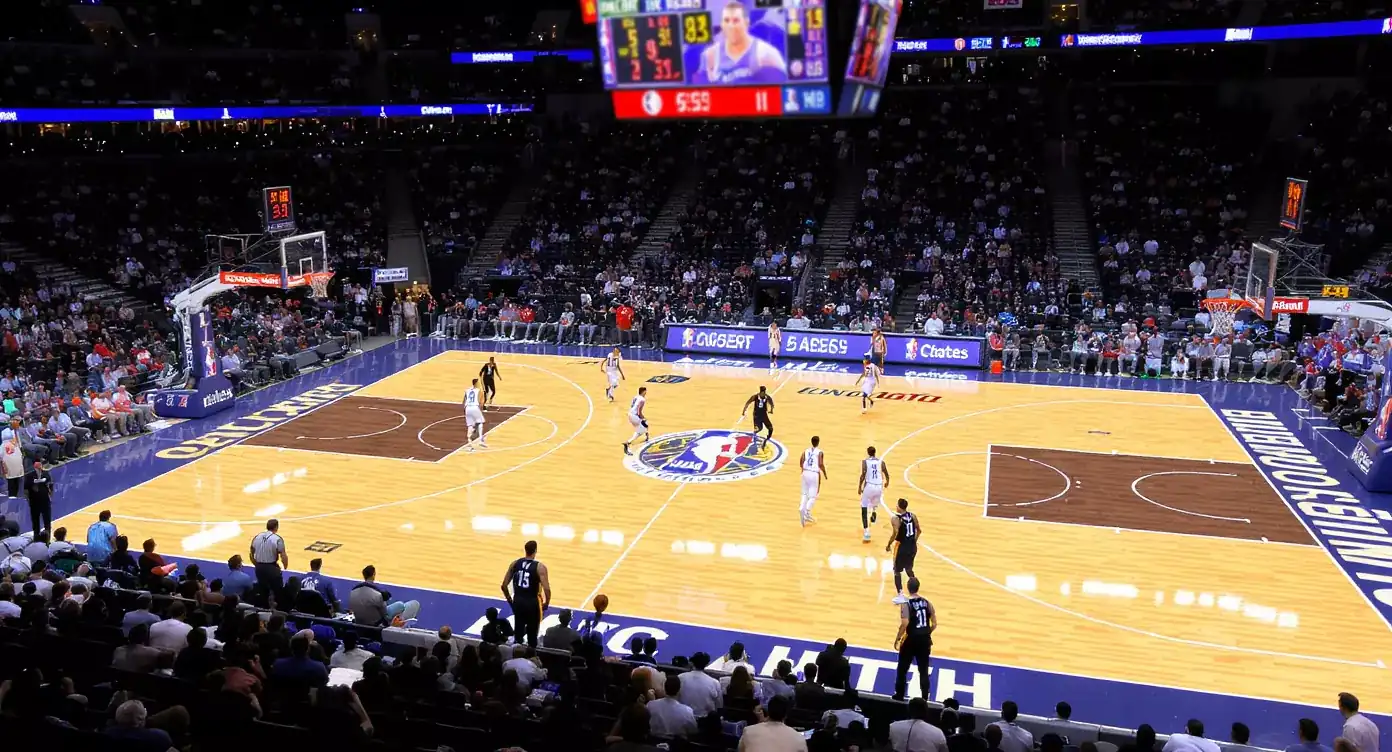
Moneyline betting strips away the spread entirely. You pick the winner. Favourites in lopsided games carry very short odds, meaning you risk a lot to win a little. There are no draws in the NBA, so moneyline bets always resolve.
Over/under totals shift your focus from who wins to how much both teams score combined. The sportsbook sets a total — say, 224.5 — and you bet on whether the actual combined score finishes above or below that number. Totals are sensitive to pace, defensive efficiency, and fatigue, factors that vary significantly across the NBA’s 82-game schedule.
Handicap — the UK term for what Americans call the point spread. The sportsbook “handicaps” the favourite by subtracting points from their final score for settlement purposes.
Totals (over/under) — a bet on the combined final score of both teams. You wager on whether the actual total will be higher (over) or lower (under) than the line set by the sportsbook.
Parlay (accumulator) — a single bet that combines two or more selections. All legs must win for the parlay to pay out. Higher potential returns, but the probability of winning drops sharply with each added leg.
Parlays and accumulators combine multiple selections into one bet. The appeal is obvious — small stakes, big potential returns. The reality is that parlays carry a compounding house edge, because the sportsbook’s margin on each individual leg multiplies across the full slip.
Example: NBA Moneyline Bet
Suppose Team A is listed at decimal odds of 1.45 (favourite) and Team B at 3.10 (underdog). A 10-pound stake on Team A returns 14.50 pounds if they win (4.50 profit). The same stake on Team B returns 31.00 pounds (21.00 profit). The moneyline reflects each team’s implied probability of winning — roughly 69% for Team A and 32% for Team B, with the remaining percentage representing the sportsbook’s margin.
Player props let you bet on individual performance: points, rebounds, assists, three-pointers, and dozens of other statistical categories. Props have exploded in popularity and carry unique integrity risks that the NBA itself has flagged. The player props guide covers research methods, two-way player restrictions, and the integrity dimension.
Futures and outrights are long-range bets on season outcomes: championship winner, MVP, conference winners, and regular-season win totals. Timing matters enormously, and the futures and championship odds guide breaks down when value tends to appear.
In-play betting is where the NBA arguably outshines every other sport. With 62.35% of online sports betting revenue now coming from live markets globally, this is the industry’s growth engine. Quarter markets, next-scorer bets, live spreads, and adjusted totals all update in real time. The NBA live betting guide covers quarter-by-quarter tactics and the specific challenges of betting games that tip off after midnight UK time.
Reading NBA Odds: Decimal, Fractional, and American
Every NBA line originates in the American format — that is where the market-making desks sit. By the time it reaches your UK sportsbook account, it has been converted into decimal or fractional odds, depending on your display settings. I use decimal exclusively. It is the fastest format for calculating returns and comparing value across different sportsbooks, and it is the default at most UK-licensed operators. But you will encounter all three formats in the wild, especially if you consume US-based NBA analysis, so knowing how they relate to each other saves time and prevents costly misreads.
Decimal odds represent your total return per pound staked, including your original stake. Odds of 2.50 mean a one-pound bet returns 2.50 pounds — one pound of stake plus 1.50 profit. To find the implied probability, divide 1 by the decimal odds: 1 / 2.50 = 0.40, or 40%. The beauty of decimal is its simplicity: higher number, bigger payout, lower implied probability. No mental gymnastics required.
Fractional odds — the traditional UK format — express profit relative to stake. Odds of 3/2 mean you win three pounds for every two staked (plus stake back). Convert to decimal: (3 / 2) + 1 = 2.50. NBA lines frequently produce awkward fractions like 10/11 or 8/13 that make quick comparison harder than the clean 5/1 you see in horse racing.
American odds use a baseline of 100. A favourite at -150 means you stake 150 to win 100; an underdog at +180 means a 100 stake wins 180. Convert to decimal: for negatives, 100/150 + 1 = 1.667; for positives, 180/100 + 1 = 2.80. American odds are the lingua franca of US-based NBA analysis, so reading them comfortably — even if you never bet in that format — is a genuine edge for research.
Converting an NBA line across all three formats
Suppose a UK sportsbook shows decimal odds of 1.91 on an NBA spread bet. That is the standard price for a -110 American line — the most common spread price in the NBA.
Decimal to implied probability: 1 / 1.91 = 52.36%.
Decimal to fractional: 1.91 — 1 = 0.91, which simplifies to approximately 10/11.
Decimal to American: because the implied probability is above 50%, the American line is negative. Formula: -(implied probability / (1 — implied probability)) x 100 = -(0.5236 / 0.4764) x 100 = -109.9, rounded to -110.
In practice, you are paying a 4.72% combined margin (both sides of a -110/-110 spread add up to 104.72%) — which is the sportsbook’s vigorish on the market.
The key skill is not memorising conversion formulas — any odds calculator handles that instantly. The key skill is recognising when odds across formats imply different probabilities for what should be the same event, because that is where value hides. If one sportsbook shows 1.95 decimal and another shows -110 American on the same NBA spread, the first is offering better value (implied probability 51.28% versus 52.38%). Over hundreds of bets, those fractions of a percent compound into real money.
Understanding bet types and odds formats gives you the vocabulary. What follows gives you the process — three research-driven pillars that separate disciplined NBA bettors from the crowd that bets on name recognition and gut instinct.
Three Strategy Pillars Every NBA Bettor Should Know
I lost money in my first two NBA seasons. Not because I picked the wrong teams — my win rate on moneylines was actually above 53%. I lost because I had no framework. I bet inconsistent amounts, chased losses with late-night in-play wagers, and ignored scheduling data that was freely available. The turnaround came when I stopped treating NBA betting as a series of isolated picks and started treating it as a process. That process rests on three pillars, and each one is backed by data that most UK guides never mention.
NBA Fatigue-Adjusted Totals Calculator
Shooting efficiency drops measurably from Q1 to Q4, and guards decline hardest on the second night of a back-to-back. Enter the line, each team’s rest, and your base read – the model adjusts the total for fatigue and finds the value.
How this works: the model starts from the book’s line as a neutral baseline, then applies a fatigue adjustment drawn from the research this site cites. A study of 2,295 games found roughly 19% of games are decided in the fourth quarter, and a separate study measured a shooting-efficiency decline from Q1 to Q4 with a large effect size (−1.27) driven by cumulative fatigue – so tired teams score less, especially late. Each team’s rest situation shifts the projection: a back-to-back trims a few points off that team’s expected scoring, and the road leg of a back-to-back trims more, because guards – who cover five-plus miles a game – decline hardest travelling on no rest. The adjustments for both teams sum into a single fatigue-adjusted total, which is then compared to the line using a typical NBA scoring spread to estimate the chance of your side landing. Value = (model chance × decimal odds) − 1. Two rested teams produce no adjustment; two teams both on the second night of a road back-to-back produce the strongest lean to the under. This isolates the fatigue signal only – it does not know pace, injuries, or matchup, so combine it with the pace research and the injury report before staking, and remember most books already price obvious back-to-backs to some degree. Every figure is a long-run average, not a guarantee for one game. Not financial advice. 18+ – GamStop and BeGambleAware are protection routes; National Gambling Helpline 0808 8020 133.
Pillar one: schedule context. The NBA’s 82-game regular season is compressed into roughly 177 days. Teams play back-to-back sets, cross time zones on overnight flights, and face altitude changes that affect conditioning. This is not trivia — it is actionable data. Research tracking NBA player performance shows that guards, who cover more than five miles per game, exhibit the most consistent statistical decline in back-to-back situations. Points, assists, and shooting efficiency all drop measurably on the second night of a back-to-back, particularly on the road. If you are betting a total or a player prop without checking whether one or both teams are on the second leg of a back-to-back, you are leaving information on the table. The beginner strategy playbook includes a step-by-step schedule analysis method.
Pillar two: fourth-quarter patterns. A study by Wang and colleagues, analysing 2,295 NBA games over ten seasons, found that 19% of games are effectively decided in the fourth quarter — defined as contests where the scoring margin entering Q4 is fewer than ten points. That means roughly one in five games comes down to the final twelve minutes, which has direct implications for live-betting timing and pre-match totals. Separately, research by Garcia and colleagues measured a shooting-efficiency decline from Q1 to Q4 with an effect size of -1.27, driven by cumulative fatigue. Translation: teams shoot worse as the game progresses, and that fatigue effect is statistically large. If you are betting fourth-quarter unders or live totals in the closing minutes, this research validates the approach — the shooting simply falls off.
Do
- Check the schedule for back-to-back games, road trips, and rest days before placing any NBA bet.
- Factor in fourth-quarter fatigue when assessing live totals — shooting efficiency drops measurably as games progress.
- Use a fixed-percentage staking plan (1-3% of bankroll per wager) and track every bet in a spreadsheet.
- Compare odds across at least three UKGC-licensed sportsbooks before confirming your slip.
Don’t
- Bet the same stake regardless of your confidence level — flat staking ignores information asymmetry.
- Chase losses by adding impulsive in-play bets after a losing pre-match wager.
- Ignore load management news — a star player resting on the second night of a back-to-back changes every market on that game.
- Assume regular-season trends carry directly into the playoffs, where rotations tighten and pace shifts.
Pillar three: line shopping as a habit. The UK sports betting market generates approximately 2.48 billion pounds in annual gross gaming yield across dozens of licensed operators. That competition means odds on the same NBA game vary between sportsbooks — sometimes by a few pence, sometimes significantly more on props and futures. Consistently finding the best available price on every bet is the single highest-impact habit in sports betting. A 2% improvement in average odds across a season compounds into real money.
Pre-Game Research Checklist
- Check both teams’ schedules: are either on a back-to-back, a long road trip, or playing the third game in four nights?
- Review the injury report and any load-management designations — pay special attention to guard absences, which affect pace and assist totals.
- Compare the spread, total, and any prop lines across at least three UK sportsbooks.
- Assess the pace-of-play matchup: a fast team versus a slow team produces different totals than two fast teams.
- Note the quarter of the NBA season — early-season lines are softer because sportsbooks have less data; late-season lines tighten as the sample grows.
- Set your stake using your fixed-percentage rule before you look at the odds. Decide the amount first, then find the best price — not the other way around.
None of these pillars requires proprietary software or expensive subscriptions. They require consistency and a willingness to treat NBA betting as a skill that improves with deliberate practice. The data is publicly available. The edge comes from actually using it.
The NBA Season Calendar and When to Bet
The NBA does not operate like the Premier League. There is no single kick-off day in August, no winter break, no neat 38-game schedule. The NBA season is a marathon that starts in October and does not end until June, with distinct phases that each produce different betting dynamics. I have learned — sometimes painfully — that the approach that works in November is wrong for April, and the strategy that prints in the first round of the playoffs falls apart in the Finals. Knowing the calendar is not just logistical; it is strategic.
Key NBA calendar phases for bettors: Pre-season (October) offers limited markets but early futures value. The regular season (late October to mid-April) spans 82 games per team across roughly 177 days — the core betting window. The All-Star break and trade deadline (February) create a mid-season pivot where rosters reshuffle and futures odds shift dramatically. The Play-In Tournament (April) adds a volatile mini-bracket. The Playoffs and Finals (April to June) compress the field and produce the highest-profile betting markets of the year.
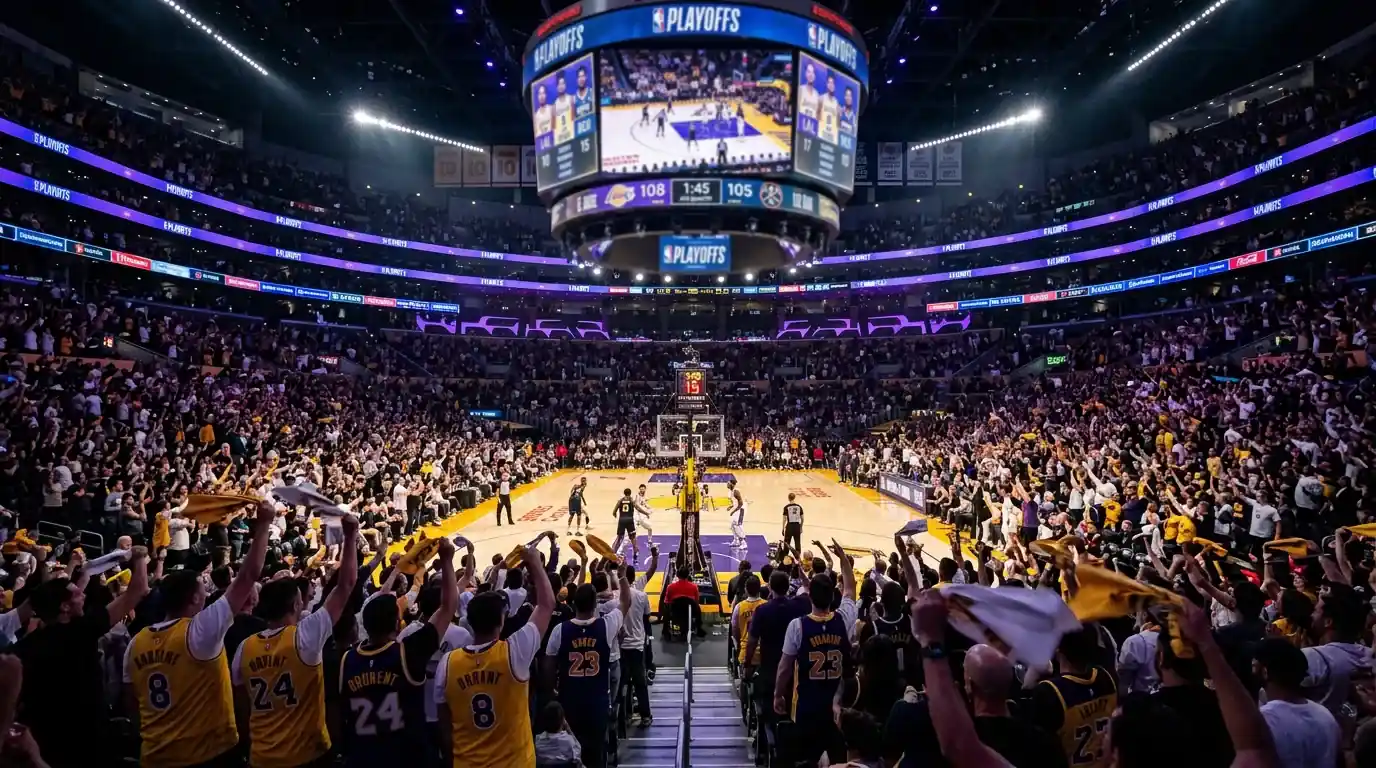
Pre-season games in October are exhibition matches with limited betting depth. I rarely bet them, but I pay close attention for futures positioning — a team showing improved chemistry in pre-season often offers better championship odds than it will three weeks into the regular season, once the market catches up.
The regular season is where volume lives. Eighty-two games per team, often with multiple fixtures on the same night, gives UK bettors a nightly menu from late evening through the early hours. Back-to-back sets produce fatigue edges, long road trips favour the home team in the final game, and the January-to-March stretch — when playoff seeding battles intensify but public attention has not peaked — is where I find the sharpest value on spreads and totals.
The All-Star break in February is a dead zone for game betting but a critical window for futures. The trade deadline falls around the same time, and blockbuster trades reshape the championship market overnight. Adam Silver, speaking at All-Star Weekend 2026, noted that the league is “currently looking at prediction markets essentially in the same way that we’re looking at sports betting markets or sports betting companies” — a signal that the NBA sees its competitive landscape and the wagering ecosystem as increasingly intertwined. When a major trade lands, I revisit every open futures position within 24 hours.
The Play-In Tournament, introduced in 2021, adds a bracket-style mini-tournament for the seventh through tenth seeds in each conference. For bettors, it is a gift: high-stakes, win-or-go-home games between evenly matched teams, often with inflated public attention on one side. The market inefficiencies in Play-In games have been noticeable in recent seasons, particularly on totals, because the defensive intensity ramps up while sportsbooks sometimes carry over regular-season projections.
The Playoffs and Finals are the peak. The 2026 postseason is averaging 3.91 million viewers per game — the highest in 33 years. Betting volumes spike, but so does market efficiency: sportsbooks sharpen their lines, casual money floods in, and the edges from a random Wednesday regular-season game largely evaporate. My playoff approach is more selective — fewer bets, larger relative stakes, and a focus on series-level markets rather than individual games.
One practical note: most NBA games tip off between 11:30 p.m. and 3:30 a.m. UK time, with Sunday afternoons (8-9 p.m. UK) and occasional Saturday matinees as exceptions. Fatigue affects decision-making, and a tired bettor making impulsive in-play wagers at 2 a.m. is the sportsbook’s favourite customer. I set a hard cut-off for in-play betting on weeknights.
Integrity, Scandals, and the Future of NBA Wagering
No guide that claims to be data-driven can skip the uncomfortable part. The NBA embraced legal betting earlier and more publicly than any other major American sports league, and that embrace has come with consequences. Some of them have landed in federal courtrooms.
Integrity is not an abstract concept in NBA betting. Real cases involving real players and real money have exposed vulnerabilities in how the league and sportsbooks police wagering. Understanding these cases is not about cynicism — it is about knowing what risks exist in the markets you bet on.
The Tim Donaghy scandal of 2007 remains the benchmark. A sitting NBA referee was convicted of betting on games he officiated and passing inside information to organised gambling figures. It shook the league’s credibility to its core and led to a complete overhaul of the NBA’s integrity monitoring infrastructure. But Donaghy was nearly two decades ago. More recent is the Terry Rozier insider betting case that surfaced in 2025, in which federal prosecutors alleged an insider sports betting conspiracy that “exploited confidential information about National Basketball Association athletes and teams,” in the words of Joseph Nocella Jr., the U.S. Attorney who brought the charges. Silver himself acknowledged the gravity: “There’s nothing more important to the league and its fans than the integrity of the competition, so I had a pit in my stomach. It was very upsetting.”
The league’s response has been a mix of technological monitoring and market restrictions. Silver has been candid about the limits of the current system, particularly around player-prop markets. He has noted publicly that “it’s too easy to manipulate something which seems otherwise small and inconsequential to the overall score. Maybe it’s the couple rebounds that some player gets or whatever.” That observation is not hypothetical — it reflects the reality that prop markets on low-profile statistical categories are inherently harder to monitor than game outcomes. The NBA has already restricted prop betting on two-way contract players (those who split time between an NBA roster and the G League), precisely because the information asymmetry around their playing time is too large to manage.
Silver has called for broader oversight, stating: “I think, probably, there should be more regulation, frankly. I wish there was federal legislation rather than state by state.” For UK bettors under the UKGC framework, this might sound like a distant American debate — but global NBA betting means integrity failures in one jurisdiction ripple across all others. An unusual line movement triggered by insider activity in the US shows up on your UK sportsbook’s odds within seconds.
What does this mean practically? Be cautious with prop markets on lesser-known players, especially those on two-way contracts or with fluctuating minutes. Pay attention to sharp line movements — if a spread moves two full points before tip-off without any public news, something is happening behind the scenes. And recognise that the NBA’s integrity infrastructure is still evolving. Silver’s 2014 call to bring betting “out of the underground and into the sunlight” was a starting point, not a finish line.
Responsible Gambling: A Framework, Not a Footnote
Most NBA betting guides stick a single line at the bottom of the page — “Please gamble responsibly” — and move on. That is not a framework. That is a disclaimer. And it does nothing to help the bettor who finds themselves chasing a bad night of results at 3 a.m. with increasingly reckless in-play wagers. I have been that bettor. Early in my career, I blew through a month’s bankroll in a single evening during the 2019 playoffs because I could not accept that my pre-game reads were wrong. The sportsbook did not stop me. Nobody stopped me. The only thing that eventually stopped me was running out of money in my betting account. That experience is why I treat responsible gambling as structural — built into the process, not bolted on at the end.
Start with the numbers that define the landscape. Ten percent of UK adults participate in online sports betting. The gender split is stark: 15% of men versus 4% of women. Average monthly active accounts in UK online gambling sit at 12.7 million. These are not small numbers. They represent a substantial portion of the adult population engaging regularly with products designed to be engaging — and, if you are not careful, consuming.
Bankroll management is the non-negotiable foundation. Set a dedicated NBA betting bankroll at the start of each season — money you can afford to lose entirely without affecting your rent, bills, or savings. Stake 1-3% of that bankroll per wager. Never increase your stake to recover losses. Review your bankroll monthly and adjust your unit size only if the bankroll has grown or shrunk significantly. This is not exciting advice. It is the advice that keeps you in the game long enough for your research edge to compound.

Cognitive biases hit NBA bettors hard because of the sport’s volume and speed. The availability bias makes you overweight the last game you watched. Confirmation bias leads you to seek statistics that support a bet you have already decided to make. The gambler’s fallacy — the belief that a team “is due” — ignores that regression to the mean does not operate on a schedule. Before confirming any bet, ask yourself whether you are acting on data or on feeling.
UK support resources: If you feel that your betting is becoming difficult to control, tools are available. Every UKGC-licensed sportsbook is required to offer deposit limits, loss limits, session time limits, and reality-check notifications. GamStop provides a free self-exclusion service that blocks you from all UKGC-licensed gambling sites for a period of your choosing. GambleAware offers confidential advice and support through its website and helpline. The National Gambling Helpline is available around the clock. These are not signs of weakness — they are tools designed for exactly the moments when your own judgment is compromised.
The regulatory environment reinforces the framework. Helen Rhodes at the UKGC has pushed for better-informed commentary around financial risk assessments, and the regulator’s expanded budget — that unprecedented 26-million-pound increase over three years — is funding precisely the kind of consumer-protection infrastructure that makes the UK market safer than unregulated alternatives. Use the tools that regulation provides. Set deposit limits before the season starts. Schedule reality checks. And if you find yourself consistently increasing stakes, extending sessions, or feeling anxious about results, take that as a signal to pause — not to double down.
Responsible gambling and profitable gambling are not opposing goals. The bettor who controls their bankroll, recognises their biases, and sets hard limits on session length is also the bettor who makes better decisions under pressure. Every system I have built over eight years includes a responsible-gambling layer, because the maths only works if you are still in the game long enough to see it through.
What UK Punters Ask Most About NBA Betting
Is NBA betting legal in the UK?
Yes. Betting on NBA games is fully legal in the United Kingdom when you use a sportsbook licensed by the UK Gambling Commission. The UKGC regulates all online and in-person gambling operators serving UK customers, ensuring fund segregation, dispute resolution pathways, and compliance with responsible-gambling standards. Offshore or unlicensed operators do not provide these protections, and using them carries significant financial and legal risk. Always verify that your sportsbook holds a valid UKGC licence before depositing funds.
Which NBA bet types are affected by overtime?
Most full-game markets — moneyline, spread, and game totals — include overtime in their settlement. If a game goes to overtime, the final score after all overtime periods is used. However, many sportsbooks settle certain markets at regulation time (48 minutes) only. These typically include quarter-specific bets, half-time bets, and some player-prop categories. The rules vary by operator, so always check the specific settlement terms in your sportsbook’s NBA rules section before placing a wager that could be affected by extra time.
What is the best way to watch NBA games live in the UK while betting?
Amazon Prime Video holds the primary NBA broadcasting rights in the UK and has driven a 312% year-on-year viewership increase. Sky Sports also carries NBA coverage. Some UKGC-licensed sportsbooks offer in-app live streaming of NBA games alongside their betting markets. The NBA League Pass subscription provides access to most games on demand, though blackout rules may apply. For live betting, a reliable stream with minimal delay is essential — even a few seconds of latency can mean the difference between catching a live line and missing it.
What do beginners need to know about NBA bet types before placing a first wager?
Start with three markets: the moneyline (picking the outright winner), the point spread (handicap betting on the margin of victory), and the over/under total (betting on combined points scored). These three form the backbone of NBA wagering and are available at every UK-licensed sportsbook. Moneyline bets are the simplest to understand but often offer poor value on heavy favourites. Spreads are the most commonly bet market among experienced NBA bettors. Totals require an understanding of pace and defensive efficiency. Master these three before moving into props, parlays, or futures.
What is an NBA same game parlay, also known as a bet builder?
A same game parlay — called a bet builder at most UK sportsbooks — combines multiple selections from a single NBA game into one bet. For example, you might combine a team to win, the total to go over 220.5, and a specific player to score more than 24.5 points. All legs must win for the bet to pay out. The appeal is the amplified odds; the risk is that the combined probability of all legs hitting is lower than most bettors intuitively estimate. Sportsbooks also adjust the odds on correlated legs (selections that are statistically linked), which reduces the payout compared to what a naive multiplication of individual odds would suggest.
What are the most common NBA bet types available at UK sportsbooks?
UK sportsbooks typically offer moneyline (match winner), point spread (handicap), over/under totals, player props, team props, quarter and half betting, futures (championship, MVP, conference winners), same game parlays (bet builders), and standard accumulators across multiple games. Market depth varies by operator and game profile — a primetime fixture will have significantly more options than an early-season Tuesday night game.
Is the UK gambling regulatory environment changing for NBA bettors?
Substantially. The Remote Gaming Duty increased from 21% to 40% in April 2026, and a new 25% remote betting duty takes effect in April 2027. These tax increases will compress sportsbook margins, likely resulting in tighter odds and fewer promotional offers for NBA markets. The Gambling Commission’s budget has also expanded significantly, funding enhanced compliance monitoring and consumer-protection enforcement. The Premier League’s ban on front-of-shirt bookmaker logos from the 2026-27 season signals a broader political shift toward reducing gambling’s visibility in sport. For NBA bettors, the practical impact is a market that rewards careful line shopping and disciplined bankroll management more than ever.
Created by the ”nba Sports bet” editorial team.